How to read this timeline
- ConfirmedA National Archives or government record names him by service number, address, or signature. This is what we know.
- Most likelyPieced together from his branch, rank, and arrival date. Reasonable, but not yet proven for him by name.
- Historical contextThe events around him during these months. He is not named; this is the world he served in.
Map of Service
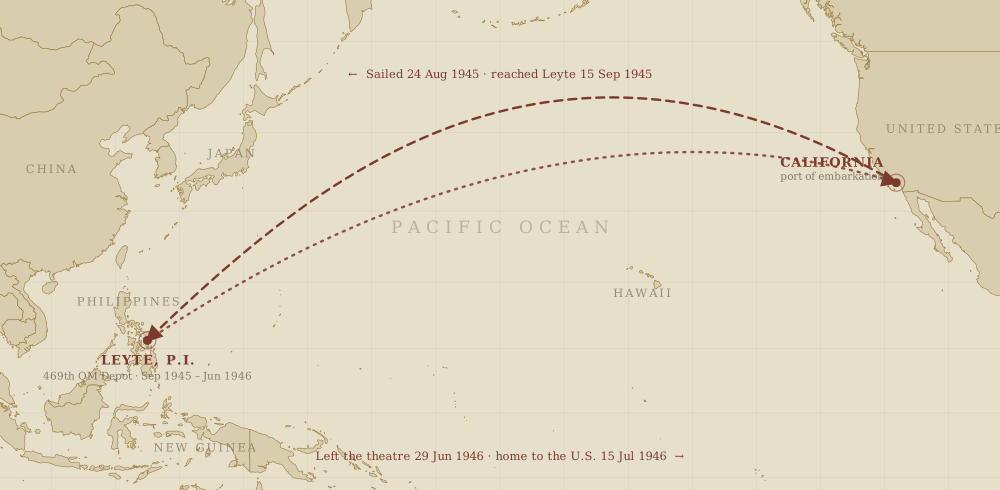
From California, across the Pacific to Leyte in the Philippines — and home again, July 1946.
His Pacific, After the War
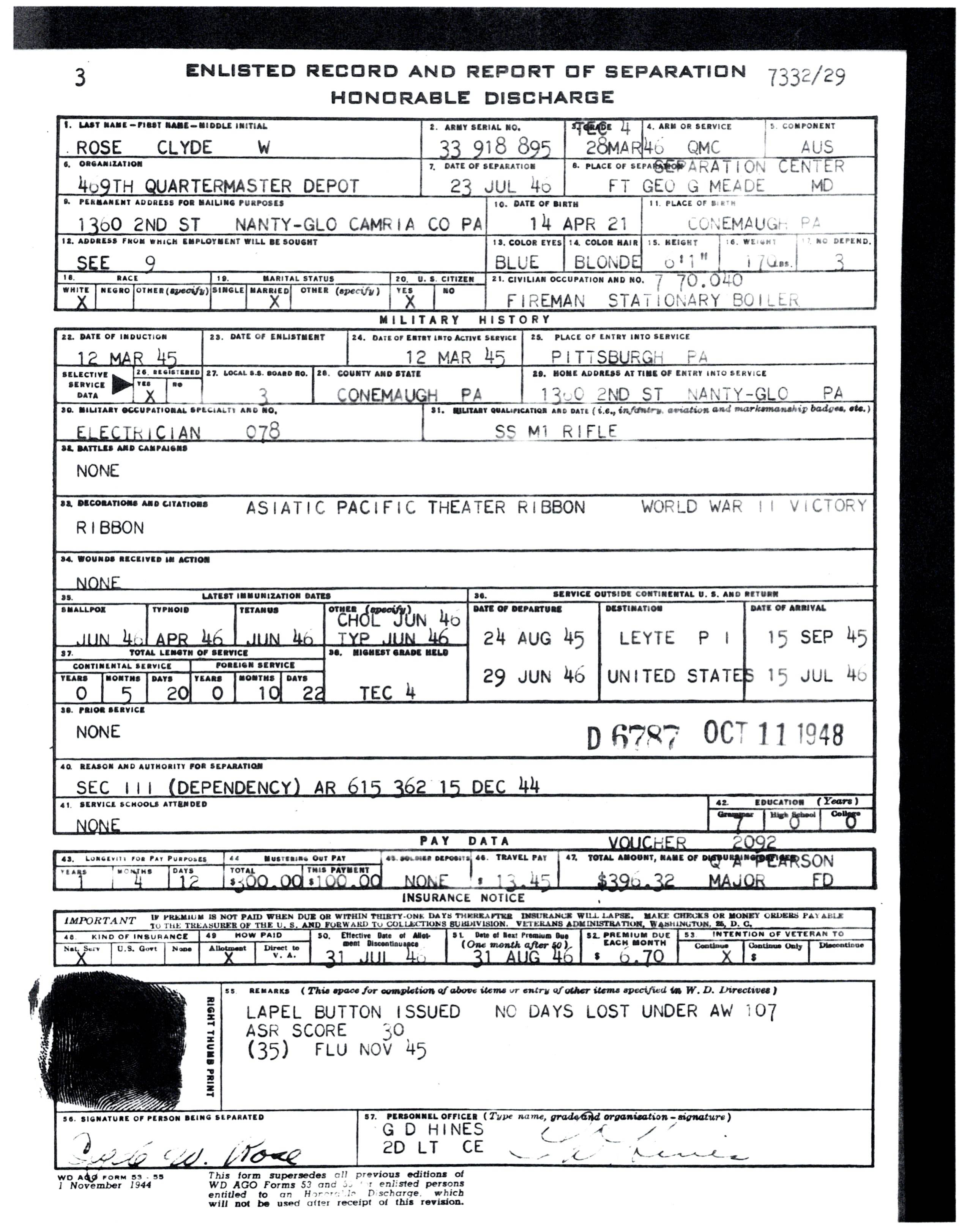
Clyde reached Leyte on September 15, 1945, about a month after Japan surrendered. He never saw combat, and his discharge lists no campaigns. The Philippines he found was the busiest rear-area supply base in the Pacific, turning from the planned invasion of Japan to the enormous job of sending millions of men and their equipment home.
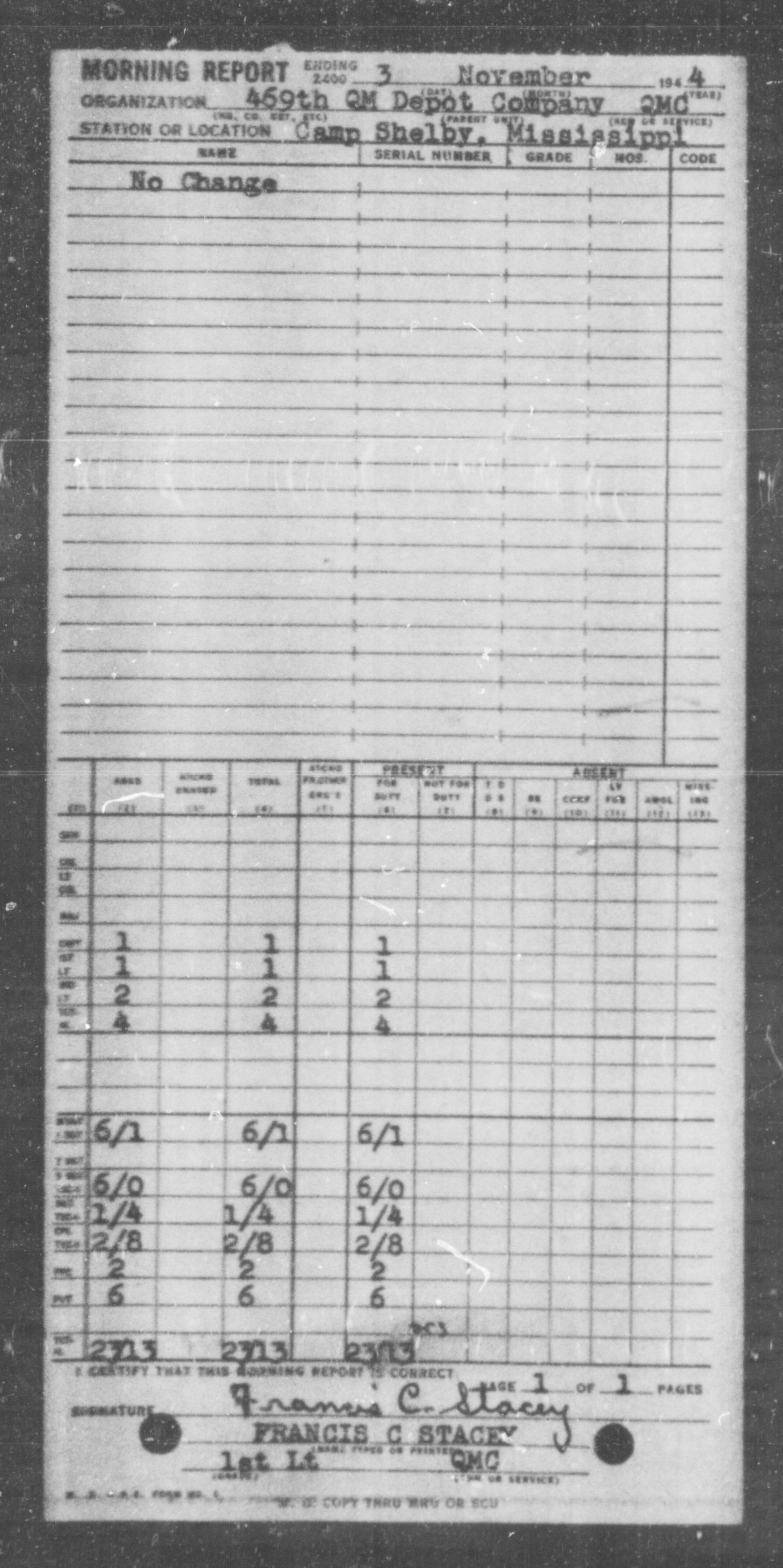
As a Quartermaster electrician (Technician Fourth Grade) with the 469th Quartermaster Depot, Clyde most likely kept the power, refrigeration, and machinery running at a supply depot. His unit had been activated at Camp Shelby, Mississippi in late 1944 and shipped to the Pacific in 1945. On Leyte the records point to Base K, the great quartermaster base at Tacloban on Leyte’s San Pedro Bay — the backbone of the drawdown: the warehouses and storage yards that fed, clothed, and equipped the troops, now crating it all for the voyage home. His unit is now confirmed; its exact station on Leyte and his day-to-day work are reconstructed.
Going home ran on a point system: points for time served, months overseas, battles, medals, and children, with the highest-scoring men sailing first. As a late-war draftee with no campaigns, Clyde had a low score of 30, so he waited while higher-point men shipped out ahead of him. Across the Philippines in January 1946, homesick GIs marched in the “Bring the Boys Home” demonstrations over that slow wait. (The largest marches were in Manila.)
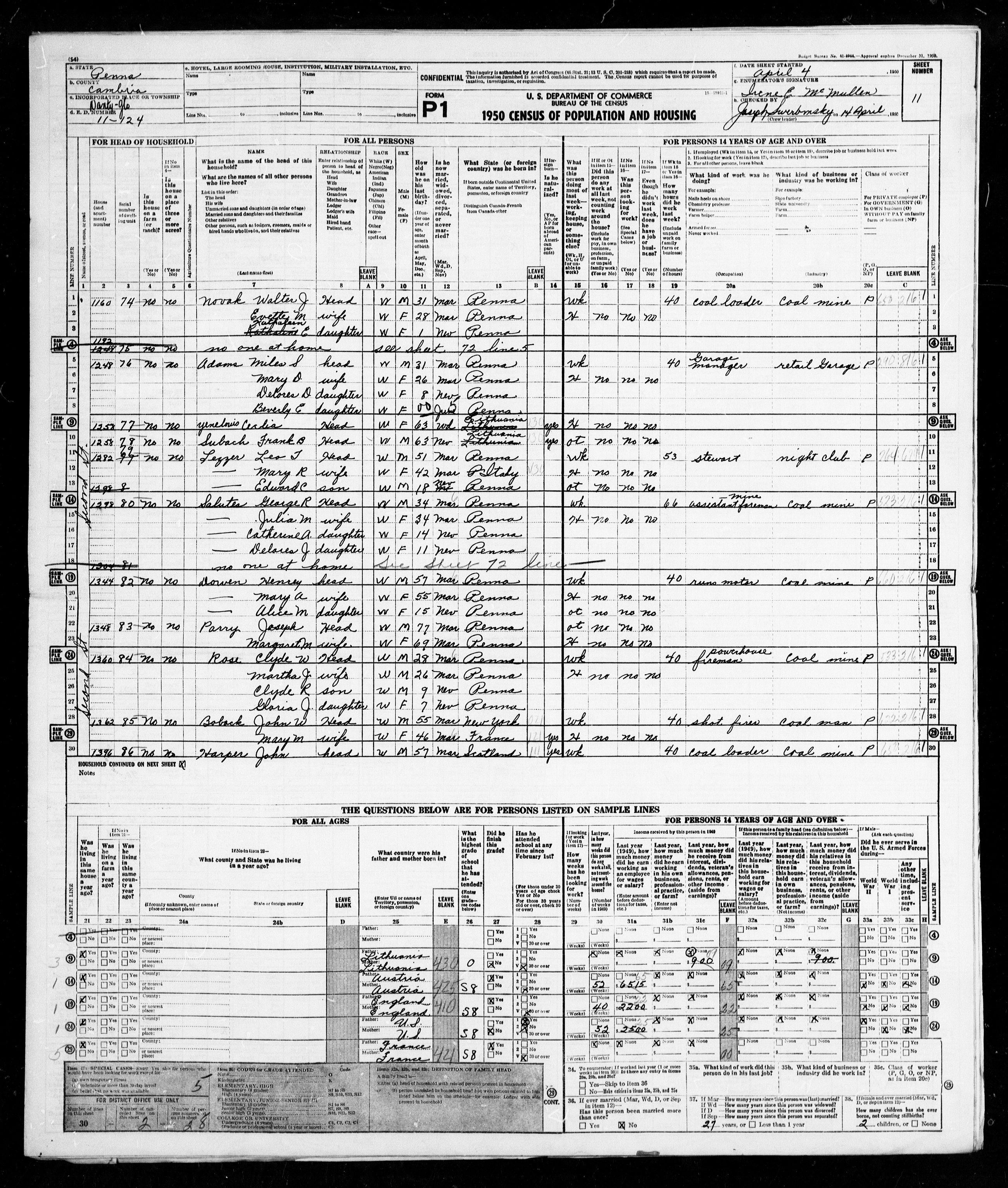
In the end his family brought him home, not his points. The Army discharged him early under a dependency rule as a married man supporting a wife and two children, and he left the islands in June 1946. The months before that were wet and monotonous, and in November 1945 he came down with the flu. The 1950 Census later found him back at 1360 Second Street with his wife Martha and their children Clyde and Gloria.
Service Timeline
Born in Mineral Point, Pennsylvania
His unit is activated — the 469th Quartermaster Depot, Camp Shelby
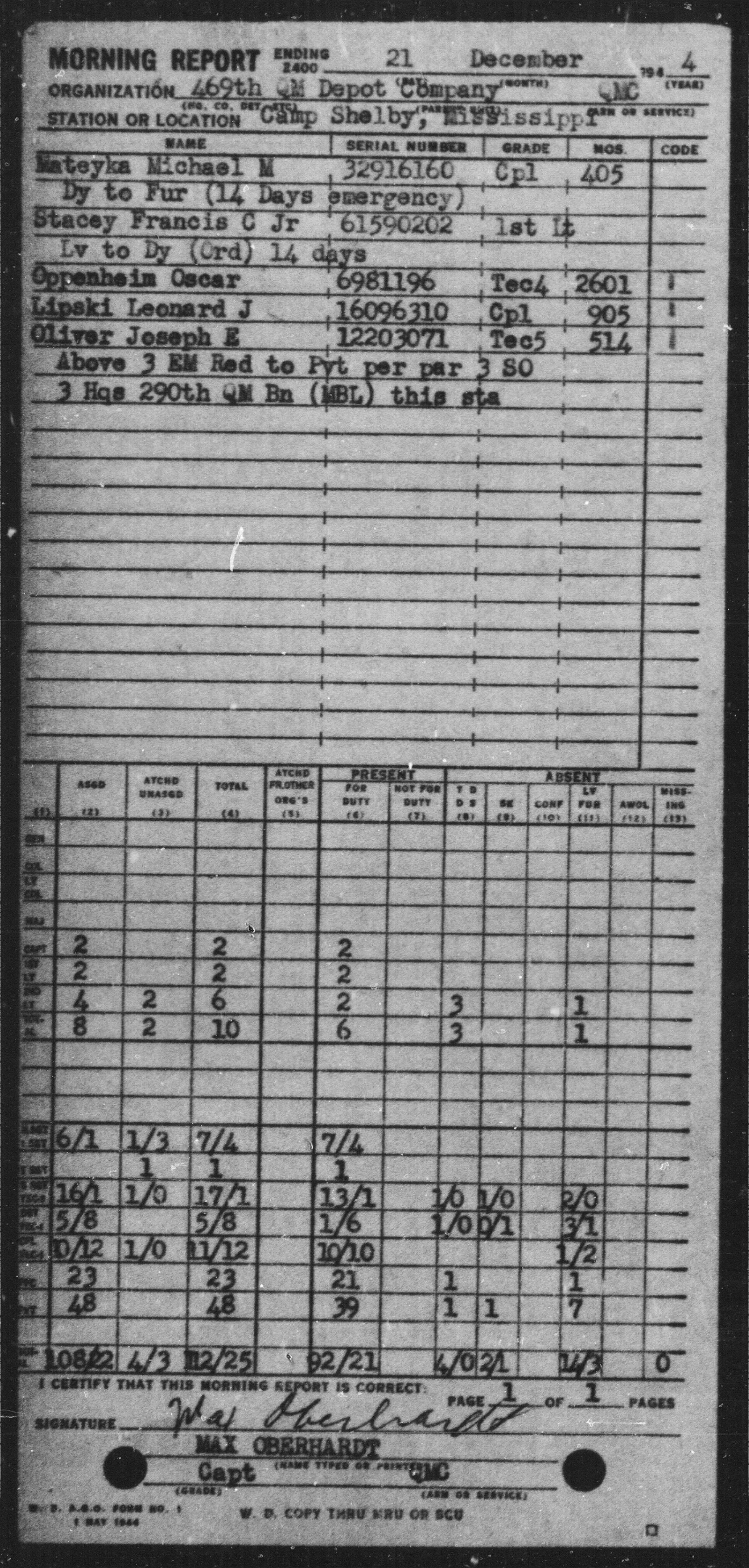
Enlisted and entered active service
Sailed for the Pacific
Arrived at Leyte, Philippines
Quartermaster depot duty on Leyte — the 469th
Came down with influenza on Leyte
Waiting out the Pacific drawdown
Returned to the United States
Honorably discharged — Separation Center, Fort George G. Meade, Maryland
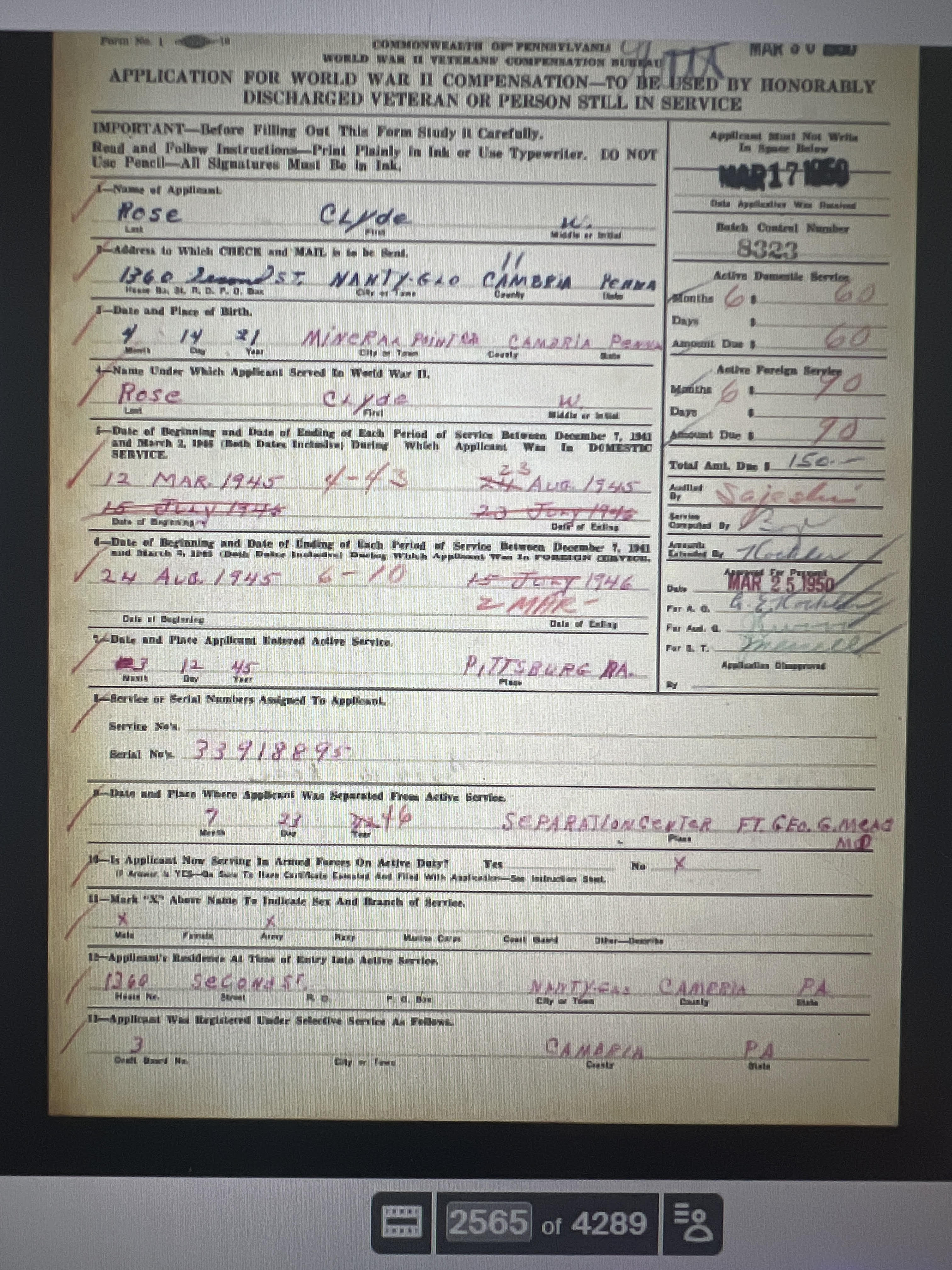
Applied for his Pennsylvania service bonus
At home with his family in Nanty Glo